
Asylum Walls
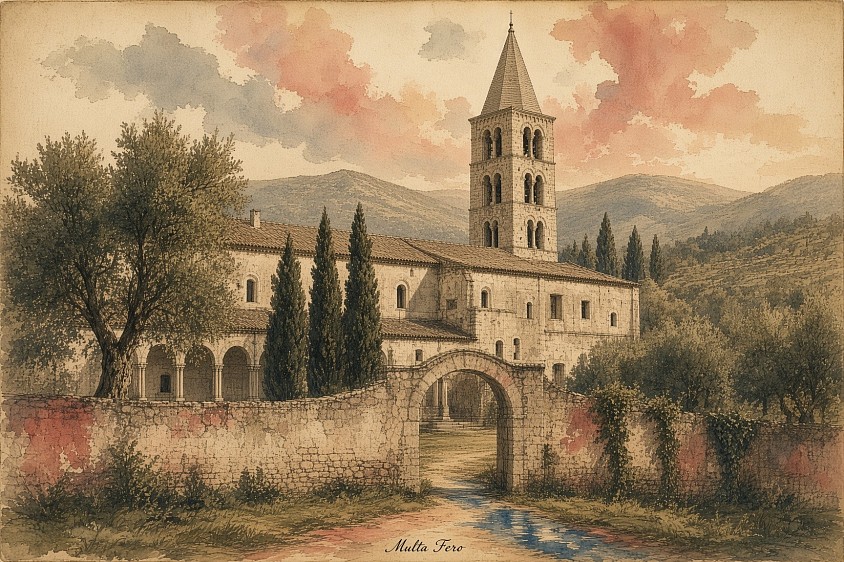
Saint-Paul-Saint-Paul-de-Mausole psychiatric hospital in Saint-Rémy
1889-1890
Economically the art market belongs to the safe and the dead. Great dealers prefer Corot’s mists and Meissonier’s soldiers; the new men sell only through stubborn loyalty. Across Europe capital gathers while makers of new vision remain tenants of necessity. Les XX in Brussels and the Independants in Paris open doors the official Salon still bars. Recognition arrives slowly, often too late.
Socially the distance between painter and citizen has become a chasm of fear. The red-headed foreigner who cut off his ear is no longer eccentric but a public hazard whose house the police may seal. The same republic that proclaims the rights of man treats the disordered mind as civic threat. Yet within that confinement a strange liberty is born: the half-empty monastery at Saint-Rémy, set among Provençal olive slopes, becomes for one man both prison and sanctuary. From the high ridge I watch him enter the gates, letters travel north, colours rise against the bars, until the age’s currents transform into stars that turn, cypresses that burn, and irises that refuse to fade.
Pastor Salles walks beside him on the dusty road; cicadas rasp from the slopes. Voluntary admission has been arranged because a larger, stricter asylum already threatens. Inside Peyron’s office the former naval physician lists the rules—painting only when calm, one hundred francs a month from Theo. Vincent answers with measured calm: “I have come because I can no longer live alone.”
The first nights the howling presses against the bars. Trabuc’s firm boots strike the flagstones. Vincent begins to understand madness as one extreme expression of the human condition. In the garden the irises open under a bleaching sky, their violet a refusal. Later the cypresses rise like black flames against intense blue; before dawn the remembered blaze becomes The Starry Night. The July attack brings the bitter taste of paint; materials are confiscated. By September the brushes return. He paints self-portraits, Trabuc as a Spanish grandee, and long series of olive groves. Two works travel to the Independants; an invitation arrives from Les XX.
In February the letter announces the birth of Theo’s son, named Vincent. Recognition from Aurier arrives like a coat too large. A collapse in Arles follows; nine weeks of near silence. “I must leave,” he writes. “The surroundings weigh on me more than I can say.”
On the seventeenth of May the brothers meet in Paris; Vincent holds the infant. Three nights later he reaches Auvers. The attic room at the Auberge Ravoux measures seven square metres; the fields begin at the village edge. He paints Gachet at the red table beside a dark foxglove, then Marguerite at the piano. By early July the letters grow heavier: “My life is attacked at the very root.”
On the evening of the twenty-seventh he walks into the wheat under a warm sky. He does not return until nearly nine. A dark stain spreads across his shirt. “I tried to kill myself.” Gachet cannot remove the bullet. Theo arrives the next morning. At half past one the breathing stops. He is buried the following day under a high clear sky; Theo places sunflowers on the coffin, pollen smearing his wrists.
La tristesse durera toujours.
From the high ridge of time I watch the year close. The republic still balances on thin compromise. The asylums remain places of storage more often than healing. The wheat that closed over the coffin still whispers. The stars he painted continue to turn. The work remains. The rest is the long continuity of the age.
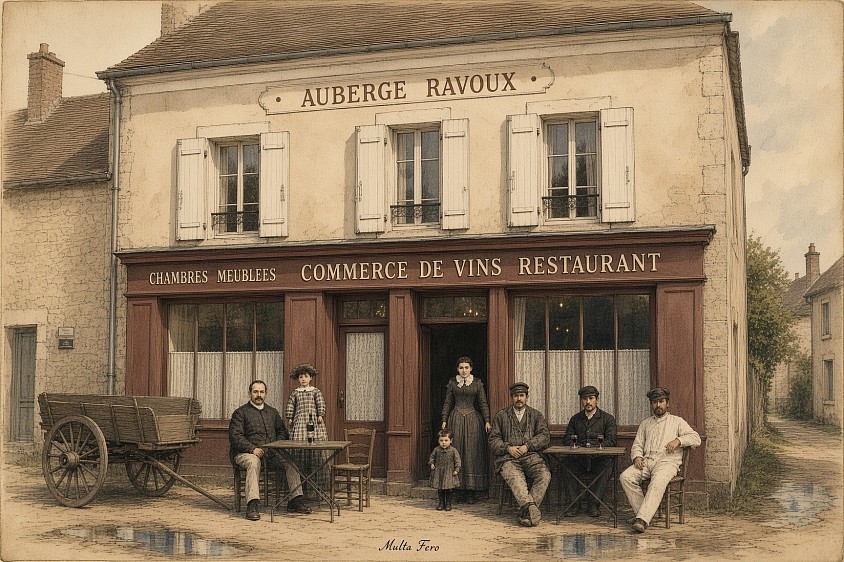
Auberge Ravoux in Auvers, France
