
Loom Gloom
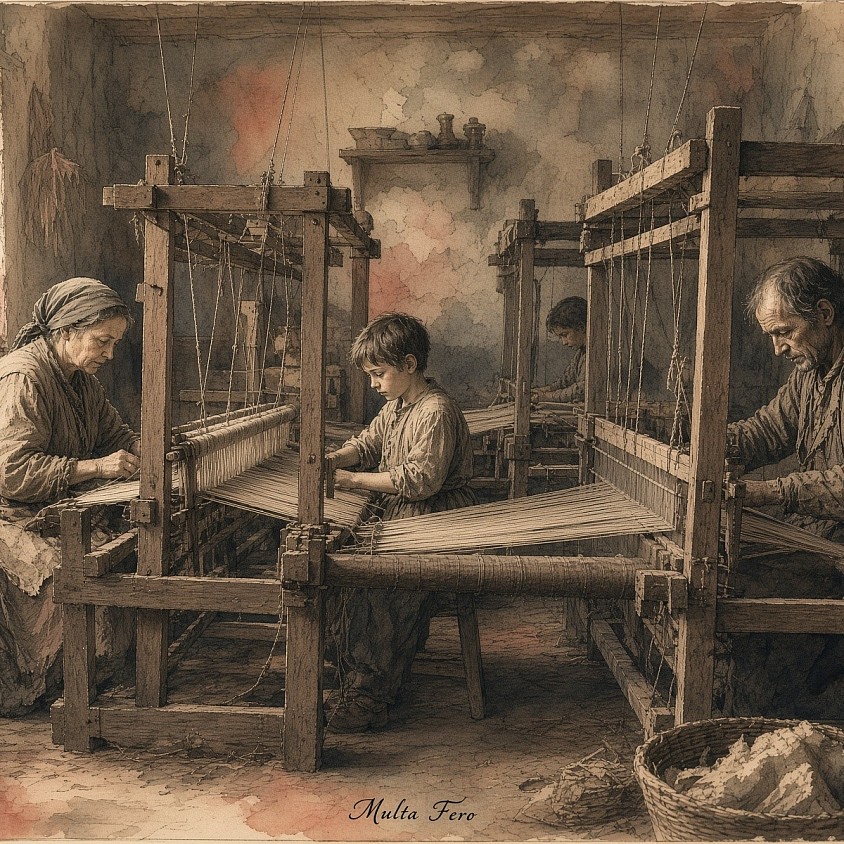
Weavers in Brabant
1884-1885, Nuenen, Brabant
Science reduces man to a complicated animal; socialism promises the poor the earth; art, restless, finds its gods in potatoes and smoke. Destiny arrives without fanfare on a winter afternoon, stepping from a peat-caked train into the slate-grey cold of Brabant.
Vincent returns to Nuenen after Drenthe, the quarrel with his father still burning. The wind carries damp earth and distant manure. The vicarage stands unchanged. Theodorus opens the door before the knock: “You have come back.” Vincent answers only that he has nowhere else. Anna urges him inside to hot soup. That night, in the mangle room that becomes his first studio, he writes Theo: the family treats him like a shaggy dog with wet paws. He accepts the role. He will be poor, a painter, remain human in nature.
Friction never eases. He brings wet studies of weavers to the table; his father complains they smell of cottages. Vincent replies they smell of work. Day after day he enters the low, smoke-stained cottages. Hendrik sits at an enormous black loom of greenish-brown oak. The shuttle’s dry clack settles into Vincent’s teeth. He produces nearly thirty studies, obsessed by the delicate cloth unspooling from brutal machinery. Colours stay muted—grays, umbers, deep blues. A weaver’s wife offers thin coffee; he stays until light fails.
Spring brings his mother’s fall. Margot Begemann, the neighbour’s daughter, arrives with clean linen and takes over the sewing class. Walks begin along the lanes. One evening she says she wishes she could die. Three days later, on a morning walk, her knees fold; she has taken strychnine. Vincent forces her to vomit, half-carries her home, runs for the doctor. The official story becomes a business trip. Doors close more firmly. Both families reject any match.
After quieter still-life exercises—straw hat, pipes, bottles on near-black grounds—he moves fully into rooms rented from the Catholic sexton. Gordina de Groot sits for him more than twenty times. “You paint me ugly,” she says. “I paint you true.” In April 1885 he returns to her family’s cottage. Five figures bend around steaming potatoes under a single oil lamp. He paints them without softness: large knotted hands, the same soil under nails that filled the dish. On 30 April he writes Theo that the canvas speaks of honest labour. He sends it to Paris marked V1.
His father dies of a stroke on 26 March. The quarrel is silenced only by the grave; it now lives entirely inside Vincent. Family tensions drive him deeper into isolation. When Gordina’s pregnancy becomes known, rumours name him. The priest confronts him near the church; models drift away. He writes Theo that the moment to leave has come.
He locks the studio, leaves the key with the sexton, boards the train for Antwerp. The rails click in pairs that answer the remembered shuttles. In the compartment he finishes the letter: keep the Potato Eaters safe; it is the best thing so far.
O passerby who has followed him from threshold to platform, know that the train carries more than a lean man. It carries the conviction forged in dark cottages: art must honour the dignity of ordinary labour, even when blood and village refuse to understand. Somewhere on the rails toward Antwerp and beyond, the memory of five figures bent like roots around a dish remains heavier than any crate.
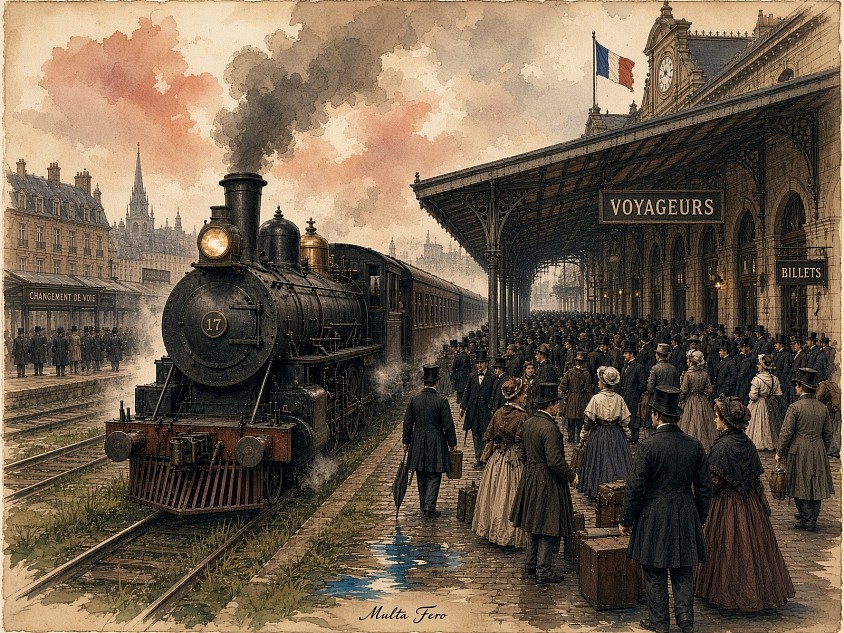
Steamloc to Antwerp
