
Another Vincent
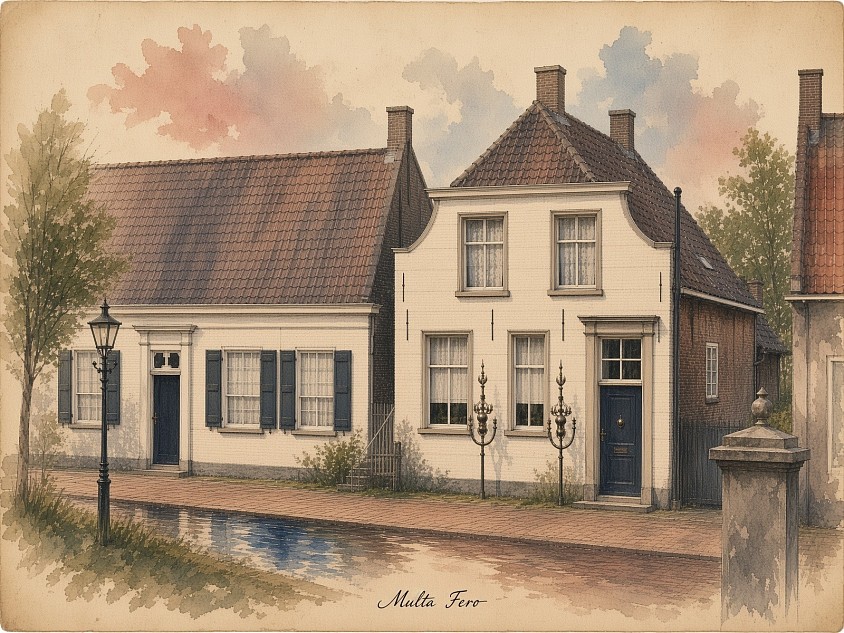
Birth house Vincent Van Gogh, the Vicarage at Nuenen
1853, Nuenen, Brabant
Condensing the sprawling March 1853 tableau into a tighter weave of rain, name, and silence yields this abbreviated chapter of roughly five hundred words.
O tender heart who listens still, understand that these great movements of thrones and armies are but the outer weather of a deeper storm. Beneath them the same rain falls upon the sandy fields of Brabant; the same peat smoke rises from cottage hearths as from the chimneys of power; the same mothers labour in silence while history, that blind and patient midwife, delivers both nations and children into the same uncertain light. Destiny does not distinguish between the fall of a ministry in The Hague and the first cry of a pastor’s son in a damp parsonage. Both are written in the same book.
I stand above the damp month of March, sensing the peat smoke and the acrid scent of charred potatoes wafting low over the Brabant fields. The lanes clutch rainwater in their ruts; boots sink and rise, releasing the cold metallic scent of mud. Catholic bells ring clear and bronze over thatched roofs, their voices carrying farther than the thinner Protestant peals that answer from the minority chapels—a sonic contest of confessional divides. Smoke from peat fires mingles with boiling cabbage and the reek of blood from butchers’ stalls, the eternal perfume of the rural poor.
Under that same sky the kingdom still trembles from the liberal constitution of 1848. King William III moves through his palaces like a man bound by parchment and popular will. News of the Pope’s decree restoring bishops arrives on the damp wind. Petitions travel north, nearly a quarter of a million names pressed into soft paper, soon to swell into the April Movement. Out on the sandy soils the potato blight has left its grey, sweet-rotting stench; life expectancy hovers near thirty-seven, and churchyards of both confessions receive small coffins with the same moss-scented regularity.
It is into this air of 1853 that the second Vincent draws his first breath inside the parsonage at Groot-Zundert on the thirtieth of March. The midwife’s cloth, already stiff from the labour twelve months earlier, drags red smears across the newborn’s closed eyelids. She lays him on his mother’s damp breast. Theodorus stands at the foot of the bed, closed Bible gripped in both hands. He does not speak the name until the child has taken his first feed.
Vincent.
I hear again the same name once spoken over a coffin no larger than a bread box. Anna turns her face toward the wall. She has carried this second son with the same body that has already failed once. The pastor watches the small chest rise and fall and feels the weight of the congregation’s eyes already measuring the living against the dead. Outside, Catholic children pass on their way to catechism, their Latin cadence a reminder that even sound itself is partitioned.
The mother’s fingers rest lightly on the infant’s back. Her thought rises: This second Vincent is not a gift restored but a debt still unpaid. Strength is not given twice in one house. Theodorus’s mind turns inward: Whether any name can outrun the shadow already cast across the cradle. The Lord gives and the Lord takes away; yet the taking came first, and the giving arrives now with a shadow attached.
The rain continues its patient work. The Catholic tower rings again; the Protestant peal answers thinner. Anna shifts the child slightly. “He will learn the garden’s boundaries before he learns the lane.” The pastor nods. “We teach him duty before he learns to speak.”
Thus the chapter of the birth closes upon the wet March of eighteen hundred and fifty-three. O spectator of this small and infinite stage, look back now upon the year. Empires will shift, ministries will fall, and men will die in distant trenches. Yet the same rain falls upon the sandy fields of Brabant and upon the fields of the Crimea. The same iron taste coats the tongue of the soldier and the midwife. Destiny writes both in the same book. The light and the dark, the living and the dead, the grandeur of geopolitics and the frailty of an infant’s first cry, are not separate dramas but one continuous text. The rain continues. The name waits. The silence between breaths does not end.
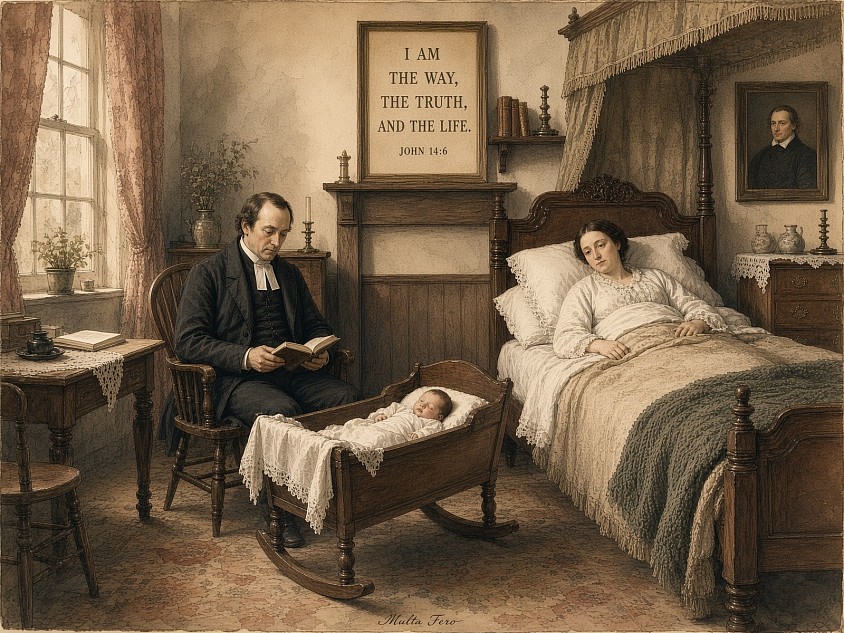
Father Theodorus Van Gogh, mother and Vincent
